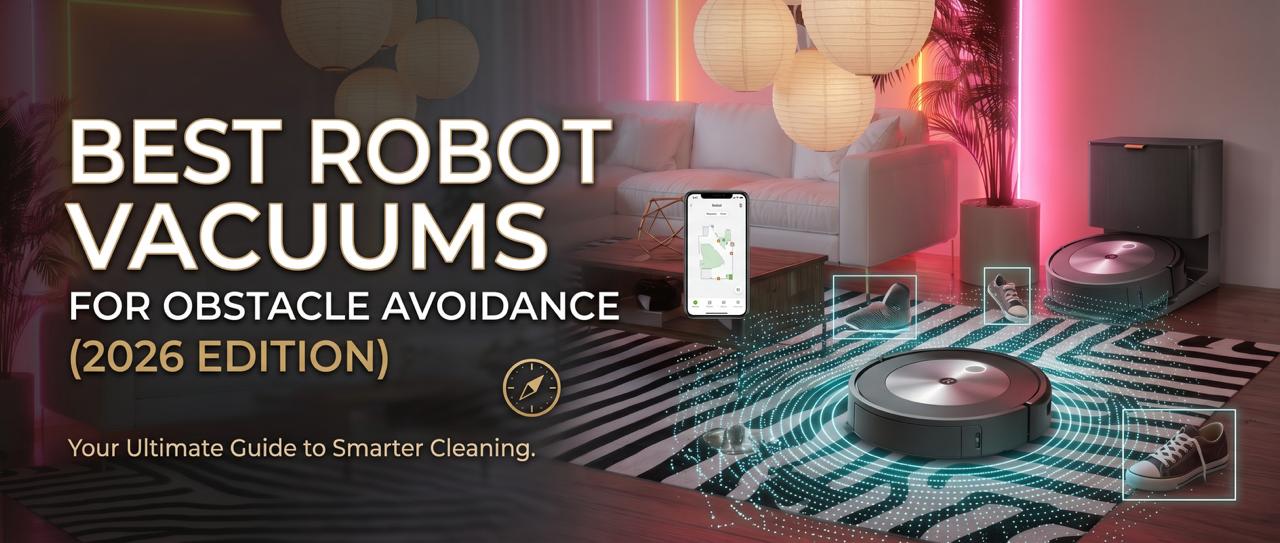
Best Robot Vacuum for Obstacle Avoidance 2026: Pet Waste, Cables, and Socks
By VacBotLab Editors · Updated August 2026 · 10 min read
There is a specific kind of horror that comes from hearing your robot vacuum going about its business, glancing over, and realizing it has been dragging a sock under every piece of furniture for the last ten minutes. Or worse: the dog had an accident overnight, and the robot found it first. These are not edge cases. They are the most common robot vacuum failure modes in real homes, and they are almost entirely avoidable if you buy the right machine.
The difference between a robot that smears pet waste across three rooms and one that quietly steers around it comes down to a single design decision: does the robot have a camera-based AI system that can actually identify objects, or does it rely solely on LiDAR and proximity sensors that can only tell it something is there?
This guide breaks down exactly how these two approaches work, which robots use each one, and what to buy depending on whether your biggest concern is a curious dog, a tangled cable nest, or just the relentless chaos of daily laundry.
Quick Summary: Best for Obstacle Avoidance
- Best for pet owners (pet waste guarantee): iRobot Roomba j7+ - camera AI, iRobot P.O.O.P. guarantee, $700
- Best for cable-filled home offices: Roborock S8 MaxV Ultra - dual cameras + LiDAR, $1,099
- Best budget camera-AI pick: Shark AI Ultra - Matrix AI camera system, $629
- Best value with strong obstacle AI: Dreame X40 Ultra - AI camera + LiDAR, $599
- Maximum avoidance at any price: Roborock Saros Z70 - robotic arm picks objects up, $1,999
The Two Approaches to Obstacle Avoidance
Robot vacuums use two fundamentally different strategies to avoid the stuff on your floor, and understanding the difference explains why some robots avoid a dropped sock and others vacuum it directly into their brushroll.
Camera-Based AI: It Sees What the Object Is
Camera AI systems, used most prominently by iRobot and Shark, place one or more cameras on the robot's body and run a trained vision model against the live feed. The model has been trained on thousands of images of real-world objects: pet waste, charging cables, socks, shoes, children's toys, and more. When the robot's camera sees something that matches a learned category, it classifies the object and routes around it before making contact.
This is a meaningful distinction. The robot is not just detecting that something is blocking its path. It is identifying what that thing is and making a deliberate avoidance decision. That is how iRobot can back their Roomba j7+ with a pet waste guarantee. The system has been specifically trained to recognize solid pet waste and treat it as a hard no-go zone.
The limitation of camera AI is lighting. These systems need adequate ambient light to function reliably. In very dark rooms or during nighttime cleaning runs, camera-based avoidance degrades. Some robots compensate with onboard LED lighting, but results vary in complete darkness.
LiDAR Only: It Detects What Is There, Not What It Is
LiDAR (light detection and ranging) works by firing laser pulses outward and measuring how quickly they return. This gives the robot a precise spatial map of its environment and lets it detect obstacles by distance. Budget and mid-range robots from Roborock, Dreame, and others use LiDAR as their primary navigation tool.
The problem with LiDAR alone is that a laser does not know what it is hitting. It measures distance, not identity. A charging cable lying on the floor may not return a strong enough signal for the robot to register it as a significant obstacle. A small pile of pet waste looks the same to LiDAR as a small pile of anything else. The robot slows down when it detects something close, but it does not have the context to make an intelligent decision about what to do. The result is often a slow push through the object rather than a deliberate avoidance.
LiDAR-only robots can still avoid larger obstacles reliably. Chair legs, furniture bases, and walls all return strong LiDAR signals. The failure mode is specifically with soft, low-profile, or small objects where the laser signal is weak or ambiguous.
The Best of Both: Dual Cameras Plus LiDAR
The Roborock S8 MaxV Ultra represents the current mainstream peak of this approach. It pairs Roborock's proven LiDAR mapping system with a front-facing RGB camera and a structured light sensor. The camera identifies objects by category. The LiDAR provides precise spatial context. Together, the robot knows both that something is blocking its path and what that something is, so it can make a smarter avoidance decision.
The Dreame X40 Ultra takes a similar approach at a more accessible price, combining LiDAR navigation with a forward-facing camera and Dreame's AI obstacle recognition, which the company says can identify over 100 object categories. In real-world use, both machines show markedly better small-object avoidance than LiDAR-only predecessors.
The iRobot Pet Waste Guarantee
iRobot made headlines when they launched the P.O.O.P. guarantee (Pet Owner Official Promise) alongside the Roomba j7 series. The terms are straightforward: if your Roomba j7+ runs into solid pet waste and spreads it, iRobot will replace the robot for free. No category in consumer technology has anything quite like it.
The guarantee is only possible because iRobot's PrecisionVision AI is specifically trained on pet waste recognition. The j7+ processes its camera feed in real time, identifies fecal matter as a distinct object category, and diverts course before contact. iRobot has enough confidence in this detection rate that they are willing to absorb replacement costs on units that fail.
For pet owners, this changes the risk calculus entirely. Running a robot vacuum while the dog is home or overnight without supervision is a gamble with most machines. With the iRobot Roomba j7+, you get a manufacturer-backed safety net. That has real practical value.
The iRobot Roomba j9+ uses the same PrecisionVision AI system and is covered under the same guarantee. It adds a larger dustbin, more powerful suction, and an improved dock. Either model delivers the core avoidance capability; the j9+ is the upgrade path for larger homes or heavier cleaning loads.
Beyond Avoidance: The Roborock Saros Z70 Picks Objects Up
Every robot on this list avoids obstacles by routing around them. The Roborock Saros Z70 takes a different approach: it picks small objects off the floor entirely before vacuuming.
The Saros Z70 ships with a retractable robotic arm mounted on its body. When the robot's camera identifies a small object it has been trained to handle (socks, small toys, crumpled paper, cables), the arm extends, grasps the object, and deposits it into a dedicated compartment. The vacuum then proceeds to clean the now-clear floor.
This is a genuinely different product category from standard robot vacuums. The arm works reliably on soft, lightweight items but does not handle pet waste or anything wet. For households where small objects on the floor are the primary cleaning disruption, the Saros Z70 is remarkable technology at a remarkable price of $1,999. For most pet owners, the Roomba j7+ at $700 is a far more practical entry point.
Obstacle Avoidance Comparison
| Robot | Obstacle Tech | Pet Waste | Cables | Socks | Price |
|---|---|---|---|---|---|
| Roomba j7+ | Camera AI (PrecisionVision) | ✅ Guaranteed | ✅ Strong | ✅ Strong | $700 |
| S8 MaxV Ultra | Dual Camera + LiDAR | ✅ Strong | ✅ Excellent | ✅ Excellent | $1,099 |
| Shark AI Ultra | Camera AI (Matrix AI) | ✅ Good | ✅ Good | ⚠️ Moderate | $629 |
| Dreame X40 Ultra | Camera AI + LiDAR | ✅ Good | ✅ Good | ✅ Good | $599 |
| S8 Pro Ultra | LiDAR + Reactive AI | ⚠️ Poor | ⚠️ Moderate | ⚠️ Moderate | $449 |
| Dreame L10s Ultra Gen 2 | LiDAR + Reactive AI | ⚠️ Poor | ⚠️ Moderate | ⚠️ Moderate | $380 |
| Saros Z70 | Camera AI + LiDAR + Arm | ✅ Avoids | ✅ Picks Up | ✅ Picks Up | $1,999 |
Top Picks: Detailed Look
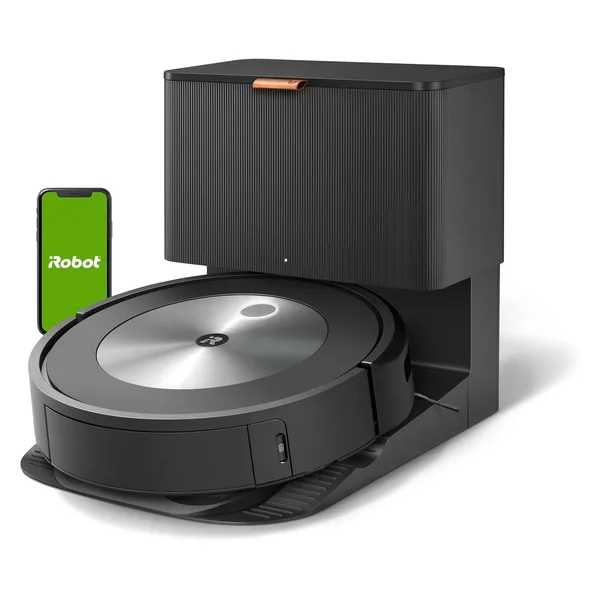
iRobot Roomba j7+
$700
The only robot vacuum backed by a manufacturer guarantee against pet waste contact. iRobot's PrecisionVision AI is trained specifically on pet waste recognition, and the P.O.O.P. promise backs it up in writing. If the robot hits solid waste, iRobot replaces it free. Beyond the headline feature, the j7+ is a well-rounded machine: solid suction, a good self-empty dock, and reliable mapping. It works best in rooms with adequate ambient light. For households with pets and peace of mind as a requirement, this is the definitive choice.
- ✅ PrecisionVision AI object recognition
- ✅ Manufacturer pet waste replacement guarantee
- ✅ Strong cable and sock avoidance
- ⚠️ Avoidance degrades in very low light
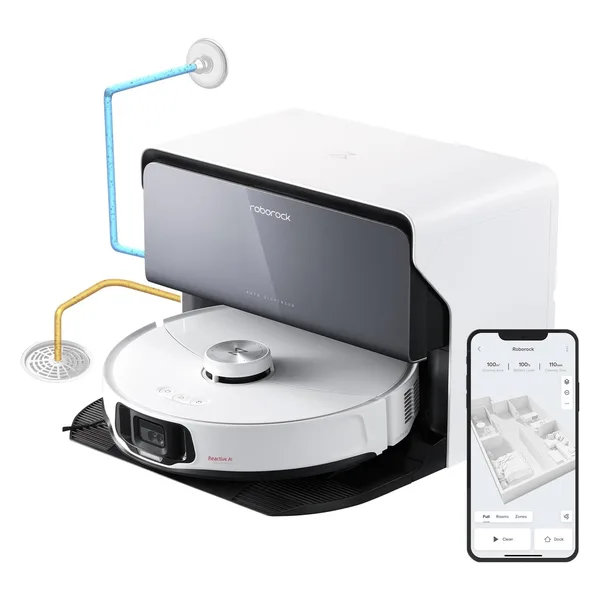
Roborock S8 MaxV Ultra
$1,099
The S8 MaxV Ultra is the best robot vacuum for environments where obstacles are the primary cleaning challenge. Its dual-camera system (one RGB camera and one structured light sensor) runs Roborock's ReactiveAI 3.0 to classify objects by category, then combines that intelligence with LiDAR's precise spatial mapping. The result is an exceptionally capable obstacle navigator: cables that trip up LiDAR-only machines are identified as cables and routed around. Socks get flagged. The machine stops, logs the obstacle, and plots an alternate route. It also mops, self-empties, self-washes mop pads, and refills its own water tank via the dock.
- ✅ Dual camera + LiDAR for maximum accuracy
- ✅ Best-in-class cable and small object avoidance
- ✅ Fully autonomous dock (empty, wash, refill)
- ⚠️ No pet waste guarantee; pricier than camera-only options
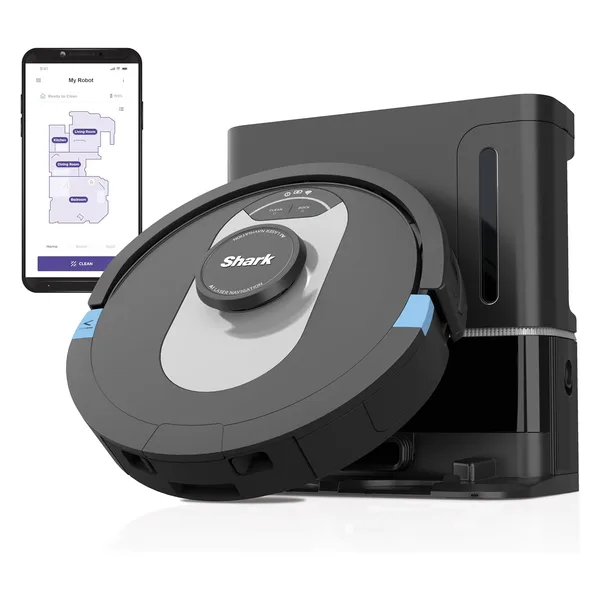
Shark AI Ultra
$629
The Shark AI Ultra brings camera-based obstacle recognition at a price below the Roomba j7+. Shark's Matrix AI system uses a front-facing camera to detect objects and their position, then reroutes the robot around them. It performs well on pet waste and cables in adequate lighting. Sock avoidance is more variable than the Roomba or S8 MaxV Ultra; flat, dark socks on dark floors occasionally get partially contacted before the system adjusts. That said, for shoppers who want real camera AI at a lower entry price, the Shark AI Ultra delivers solid real-world performance with a self-empty dock included.
- ✅ Matrix AI camera obstacle recognition
- ✅ Good pet waste avoidance in adequate light
- ✅ Self-empty dock included
- ⚠️ Sock avoidance less consistent than top picks
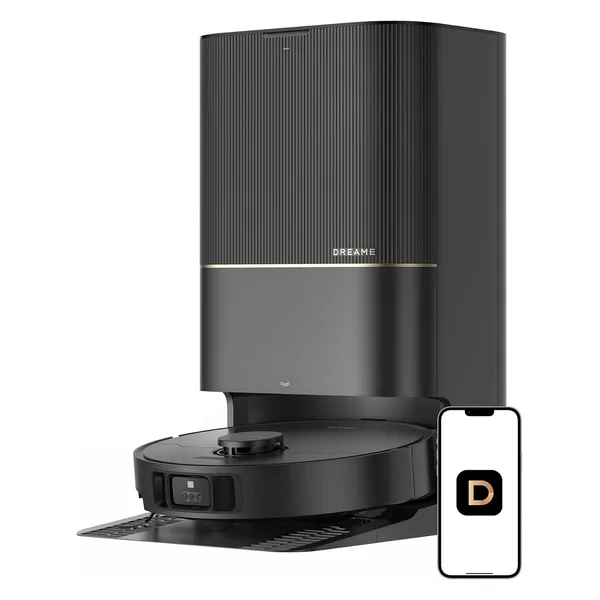
Dreame X40 Ultra
$599
Dreame's flagship obstacle-avoidance model combines LiDAR navigation with a forward-facing camera running AI classification across over 100 object types. The X40 Ultra is the most affordable robot on this list to combine both technologies, and it shows in performance: cable avoidance is reliably better than LiDAR-only Dreame models, and pet waste detection works well in moderate to good lighting. Mopping is handled by dual spinning mop pads that auto-lift when the robot transitions to carpet. The X40 Ultra is the strongest value play for shoppers who want camera AI and do not need the manufacturer guarantee that only comes with iRobot.
- ✅ Camera AI + LiDAR combination
- ✅ 100+ object category recognition
- ✅ Most affordable dual-sensor pick
- ⚠️ No pet waste replacement guarantee
Which Robot Should You Actually Buy?
The right choice depends entirely on your specific obstacle problem. Here is the honest breakdown.
Budget-Conscious Pet Owners
If your priority is pet waste avoidance and you want genuine peace of mind without paying for the most expensive option, the iRobot Roomba j7+ at $700 is the clear answer. No other manufacturer offers anything close to the P.O.O.P. guarantee. The Shark AI Ultra at $629 is a credible runner-up if the budget is tight, but there is no safety net if it fails. The $71 premium for the j7+'s guarantee is worth it for the majority of pet-owning households.
Cable-Filled Home Offices
Cables are where LiDAR-only robots fail most visibly and most expensively. A robot that tangles in a charging cable can pull a laptop off a desk or damage connected peripherals. For home offices with cable-heavy setups, the Roborock S8 MaxV Ultra is the right machine. Its dual-camera system identifies cables specifically and avoids them reliably across multiple cleaning runs. The Dreame X40 Ultra at $599 is a strong budget alternative with solid cable recognition at a lower price.
Maximum Obstacle Avoidance at Any Price
If obstacle avoidance is your top priority and budget is secondary, the Roborock Saros Z70 at $1,999 is in a category of its own. Routing around a sock is one thing. Picking the sock up, stowing it, and vacuuming the clean floor underneath is a different value proposition entirely. For large homes where floor clutter is constant, the Saros Z70 reduces the human pre-cleaning prep that even the best avoiding robots still require.
A Note on Budget LiDAR Robots
The Dreame L10s Ultra Gen 2 and Roborock S8 Pro Ultra are excellent robots for the money. They map well, clean thoroughly, and handle most standard household debris without issue. What they do not have is camera-based object classification. Their LiDAR sensors can tell when something is close; they cannot identify what that something is.
If your home is generally tidy, you pick up socks before running the robot, and your pet has never had a floor accident, these machines are very capable at a lower price point. But if obstacle avoidance is a genuine daily concern, the performance difference between a LiDAR-only robot and a camera AI robot is significant enough to justify the price step up.
Frequently Asked Questions
What is the best robot vacuum for avoiding pet waste?
The iRobot Roomba j7+ is the best robot vacuum for avoiding pet waste. It uses a forward-facing camera and PrecisionVision AI to identify and navigate around solid pet waste in real time. iRobot also backs this with their Pet Owner Official Promise (P.O.O.P.) guarantee: if the j7+ runs into pet waste, they will replace the robot for free.
Does LiDAR alone prevent a robot vacuum from hitting obstacles?
LiDAR alone is not sufficient for reliable obstacle avoidance of soft or small objects. LiDAR measures distance via laser, so it detects when something is in the way, but it cannot identify what the object is. Soft items like socks or small piles of waste can be partially detected but are often nudged or driven over rather than avoided. Camera-based AI systems that classify objects by type perform significantly better in these situations.
Can robot vacuums avoid charging cables?
Camera-based systems like the Roomba j7+ and Shark AI Ultra can detect and avoid cables in most lighting conditions. LiDAR-only robots often tangle in thin cables because the laser beam passes over or between them. Robots with dual cameras, like the Roborock S8 MaxV Ultra, combine visual recognition with proximity sensing for the most reliable cable avoidance.
What is iRobot's pet waste guarantee?
iRobot's P.O.O.P. guarantee (Pet Owner Official Promise) covers the Roomba j7 and j7+. If the robot vacuums over solid pet waste, iRobot will replace the unit for free. The guarantee applies when the robot is used as directed and has up-to-date software. It is one of the strongest manufacturer guarantees in the robot vacuum category.
Which robot vacuum is best for a home with cables and a home office?
The Roborock S8 MaxV Ultra is the best choice for cable-filled home offices. Its dual-camera system identifies cables and other small objects, then routes around them. It also combines LiDAR mapping for precise room layout with visual AI for object classification, giving it an edge over single-camera or LiDAR-only robots in cluttered spaces. Budget alternative: the Dreame X40 Ultra at $599 delivers similar dual-sensor performance for $500 less.
Related Guides
-
Best Robot Vacuums of 2026: Our Top Picks Across All Categories
The full overview: best overall, best budget, best for large homes, and more.
-
Best Robot Vacuums for Pet Hair 2026: Tested on Real Fur
Going beyond avoidance: the robots that handle shedding, dander, and fur-clogged filters.
-
Robot Vacuums for Allergies: HEPA Filters, Air Sealing, and What Actually Helps
If pet waste avoidance is a priority, air quality likely is too. Here's what to look for.
VacBotLab earns a commission from qualifying Amazon purchases. Prices and availability may change. Our recommendations are based on independent testing and editorial judgment.