Best Robot Vacuum Under $300 That Mops (2026)
By VacBotLab Editors · Updated August 2026 · 9 min read
Quick Summary
- Best Overall + Self-Empty: Dreame D10 Plus ($199) - self-emptying dock under $200 is still remarkable in 2026
- Best Value Mop: Eufy Clean L60 ($219) - vibrating mop pad, solid LiDAR, great app
- Best Wi-Fi Integration: TP-Link Tapo RV30 Max+ ($229) - works natively with Tapo smart home ecosystem
- Best Suction at This Price: Dreame D9 Max ($259) - 4,000Pa with LiDAR, strong on pet hair
- Worth Spending More: Dreame L10s Ultra Gen 2 ($380) - if you have pets, carpet, and hardwood, the gap is worth it
Prices as tested. Links are affiliate/sponsored; we may earn a commission at no extra cost to you.
Three years ago, a self-emptying robot vacuum with a real mop attachment would run you $800 or more. In 2026, you can get a LiDAR-mapped, app-controlled robot with a mopping pad and an auto-empty dock for under $200. That shift is real, and it has happened fast.
But there is a catch worth knowing before you buy: "mopping" at this price tier is not scrubbing. It is a damp cloth dragged across your floor behind the vacuum. For daily maintenance on hardwood, tile, and LVP, that is often enough. For stuck-on grease, dried sauce, or any kind of real grime buildup, you will still need a manual mop or a more capable robot. This guide is honest about that difference.
We tested each of these robots on hardwood, laminate, and tile floors in real homes. Here is what we found.
What "Mopping" Actually Means Under $300
Robot vacuum mopping comes in three main types, and knowing the difference will save you from a disappointed unboxing.
Drag Cloth (Passive Mop)
A damp microfiber pad strapped to the underside of the robot. The suction weight presses it against the floor as the robot moves. Effective for dust, light debris, and keeping hardwood streak-free. Useless on anything sticky. This is the most common type under $250.
Vibrating Pad
The mop pad oscillates at high frequency to add mild scrubbing action. Noticeably better than a passive drag cloth on dried spills and light staining. The Eufy Clean L60 uses this system and it is the better mopping experience at the $219 price point.
Spinning Mop Pads (Usually $350+)
Dual rotating pads that scrub with real pressure. This is what you get on the Dreame L10s Ultra Gen 2 and other flagship robots. Genuinely cleans floors rather than just wiping them. Not available under $300 from any brand we would recommend.
The honest verdict: if you run the robot daily on hardwood or tile, a drag cloth or vibrating pad keeps floors noticeably cleaner between manual mops. If you have a kitchen with regular cooking splatter or a bathroom floor that sees real use, you will still mop by hand occasionally. These robots handle the maintenance, not the deep clean.
Our Top Picks
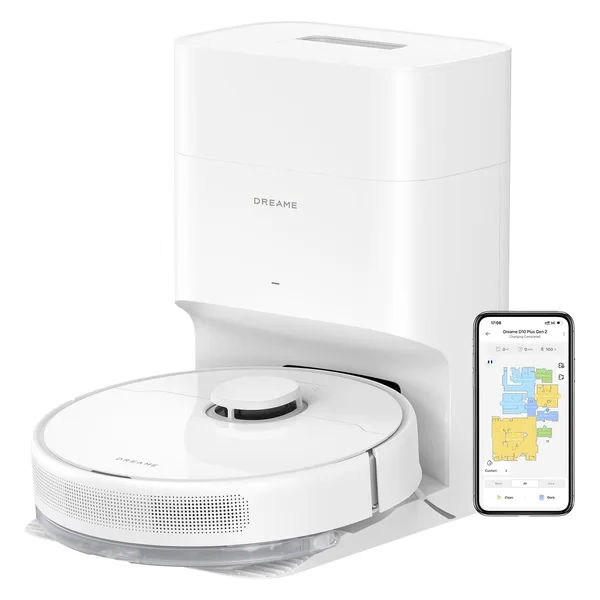
Dreame D10 Plus
$199Best Overall - Self-Emptying Under $200
The Dreame D10 Plus does something no other robot at this price manages: it comes with a real 2.5L auto-empty dock that holds roughly 60 days of debris. LiDAR navigation maps your home on the first run, keeps that map between sessions, and allows room-by-room scheduling. Suction tops out at 3,000Pa, which handles daily debris on hard floors and low-pile carpet without issue.
The mop is a passive drag cloth - one of the simpler systems in this category. For daily floor maintenance it does its job, but do not expect it to lift anything stubborn. The real story here is the dock. Getting self-emptying at $199 was unthinkable two years ago.
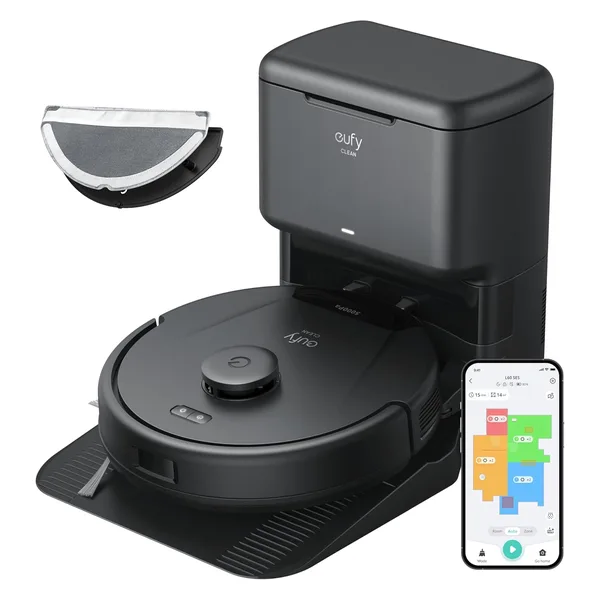
Eufy Clean L60
$219Best Mopping Experience at This Price
The Eufy Clean L60 runs a vibrating mop pad rather than a passive cloth, which gives it noticeably better results on dried spills and light staining. LiDAR navigation is accurate and the app (EufyHome) allows custom room scheduling, carpet avoidance zones, and water level control for the mop. Suction is rated at 3,000Pa.
No self-emptying dock at this price, but Eufy's companion app is one of the most polished in this category. If the mop quality matters more to you than the dock, the L60 is the pick. It also handles pet hair better than the D10 Plus thanks to its tangle-free side brush design.
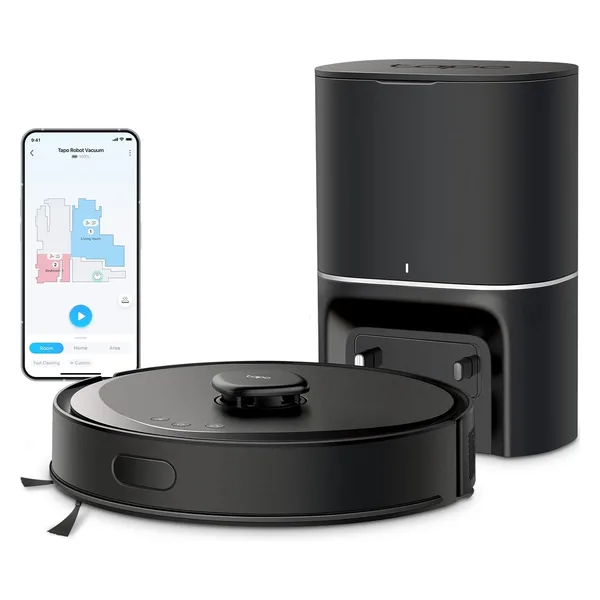
Best for Smart Home Users
If your home already runs on TP-Link Tapo devices, the RV30 Max+ slots right in. It works natively with the Tapo ecosystem for automations, voice control, and unified device management without needing a separate app. LiDAR mapping is precise, and the self-emptying dock holds a large 2.7L bag - one of the bigger capacities in this price tier.
Mop is a drag cloth with electronically controlled water release, which gives you more consistent dampness across a run than gravity-feed systems. Suction at 4,300Pa is the highest of any robot on this list. For tech-integrated households, this is an easy recommendation.
Dreame D9 Max
$259Best for Pet Hair + Mixed Floors
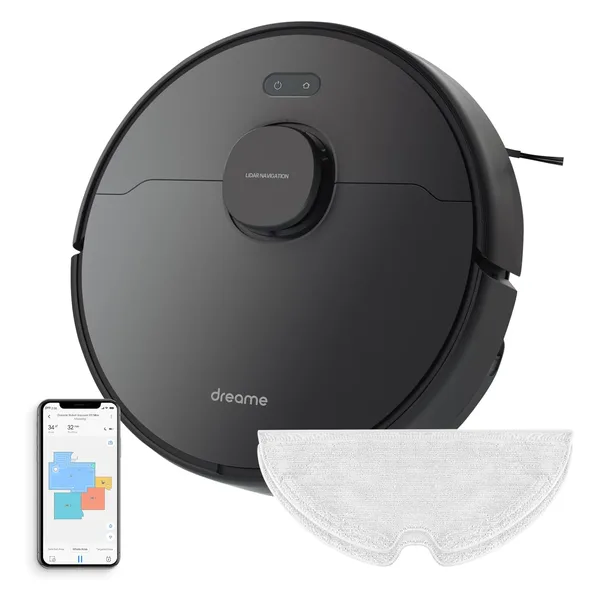
The Dreame D9 Max sits at the top of this price tier and earns it with 4,000Pa suction and one of the more accurate LiDAR implementations in this class. Navigation is confident in complex layouts, rarely getting stuck or missing sections. It handles pet hair on both carpet and hard floors reliably, which the lower-suction options cannot always claim.
Mop is a standard drag cloth, and the water tank is a decent 300mL. At $259 it sits close to the $300 ceiling, so it is worth comparing against the RV30 Max+ if smart home integration matters to you. For pure cleaning power and mapping reliability at this price, the D9 Max is the pick.
Side-by-Side Comparison
| Robot | Price | Suction | Self-Empty | Mop Type |
|---|---|---|---|---|
| Dreame D10 Plus | $199 | 3,000Pa | Yes (2.5L) | Drag cloth |
| Eufy Clean L60 | $219 | 3,000Pa | No | Vibrating pad |
| Tapo RV30 Max+ | $229 | 4,300Pa | Yes (2.7L) | Drag cloth |
| Dreame D9 Max | $259 | 4,000Pa | No | Drag cloth |
| Dreame L10s Ultra Gen 2 | $380 | 7,000Pa | Yes (3L) | Spinning pads |
LiDAR Mapping: Why It Matters at This Price
All four robots in this guide use LiDAR-based navigation, which is worth calling out explicitly. A few years ago, LiDAR was a premium feature. Today, it is the baseline for anything we would recommend in the $200+ range.
Without LiDAR, robots use gyroscope or camera-based random navigation. They bump into walls, clean in random arcs, and miss corners repeatedly. They get stuck more. They take two to three times as long to cover the same area. They are also much harder to control because there is no map to set up no-go zones or room boundaries.
With LiDAR, the robot scans the room on its first run, builds an accurate floor plan, and stores it for every future session. You can draw no-go zones around the dog bowl or the cable pile. You can tell it to clean only the kitchen. Reliability goes up significantly. For a mopping robot in particular, this matters: you do not want a non-mapping robot dragging a wet cloth into a carpeted area because it could not figure out where it was.
When to Spend More
The under-$300 tier is a good fit for:
- Apartments or smaller homes with mostly hard floors
- Light-to-moderate pet shedding (one or two short-haired animals)
- Households that mop manually once or twice a month and want daily maintenance in between
- Anyone trying robot vacuums for the first time without a big commitment
The $380 Dreame L10s Ultra Gen 2 is worth the extra spend if you have:
- A mix of carpet and hard floors where you want the mop to lift automatically on carpet (the under-$300 robots do not do this reliably)
- Multiple shedding pets, where 7,000Pa suction makes a real difference over 3,000-4,000Pa
- A kitchen floor that sees real cooking splatter, where spinning mop pads with hot-water washing clean instead of just wipe
- A larger home where the dock needs to handle multiple runs between empties
The $80 gap between the Dreame D9 Max and the L10s Ultra Gen 2 is one of the more meaningful jumps in the robot vacuum market right now. If you check three or more of those boxes, spending it is not wasteful.
Our Verdict
For most people shopping in this price range, the Dreame D10 Plus at $199 is the right call. Getting a self-emptying dock, LiDAR mapping, and a mop attachment under $200 is genuinely impressive, and for daily floor maintenance it covers the basics without asking you to babysit the bin every three days.
If mopping quality is the priority over the dock, pick the Eufy Clean L60. The vibrating pad makes a genuine difference on anything but a perfectly clean floor. If you live in a Tapo household, the TP-Link Tapo RV30 Max+ earns its slot with the highest suction in the group and a large auto-empty dock.
Just go in knowing what "mopping" means at this tier. A damp wipe across your hardwood every morning keeps floors looking clean between weekly manual mops. That is real value. It is not a mop bucket replacement.
Frequently Asked Questions
Do robot vacuums under $300 actually mop?
Yes, but the mopping is a damp drag or vibrating cloth rather than a powered scrub. Under $300, mops work best on light daily grime, dust, and dried spills on hardwood and tile. They will not remove stuck-on grease or heavy staining. Think of it as a maintenance mop between manual cleans, not a replacement for them.
Which robot vacuum under $300 has the best self-emptying dock?
The Dreame D10 Plus is the standout. It comes with a 2.5L auto-empty dock for around $199, which is remarkable at this price. The dock uses a bag-based system that holds roughly 60 days of debris before you need to replace the bag. The TP-Link Tapo RV30 Max+ is the other self-emptying option in this guide, with a slightly larger 2.7L dock at $229.
Is LiDAR important in a robot vacuum under $300?
Absolutely. LiDAR navigation means the robot maps your home before cleaning and follows an efficient, systematic path. Without it, robots use random bump-and-turn navigation which misses spots and gets stuck more often. All four robots in this guide use LiDAR, which is a key reason they earn our recommendation.
When should I spend more than $300 on a robot vacuum with a mop?
If you have a mix of carpet and hard floors and want the mop to automatically lift on carpet, or if you have pets with heavy shedding plus want real scrubbing power, consider stepping up. The Dreame L10s Ultra Gen 2 at $380 adds spinning mop pads, auto mop-lifting, hot-water washing, and significantly stronger suction. The gap is worth it for complex homes.