Roborock vs Dreame 2026: Which Brand Actually Wins?
By VacBotLab Editors · Updated August 2026 · 13 min read
For about three years, recommending a robot vacuum was simple: Roborock if you could afford it, something else if you couldn't. That's no longer the case. Dreame has spent the last 18 months releasing machines that match Roborock on features and beat it on price at almost every tier below $700.
I ran the two brands side by side for 3 months across 4 machines. Here's what I actually found, category by category.
Short Answer
- Buy Dreame if your budget is under $600 and mopping performance matters. The L10s Ultra Gen 2 at $380 is the best value in robot vacuums right now.
- Buy Roborock if you want the best obstacle avoidance, the best app, or a machine you'll trust to run without babysitting. Above $600, Roborock is consistently better.
- The real answer: neither brand is always better. The right pick depends on your floor type, your use case, and how much you actually care about mopping vs vacuuming.
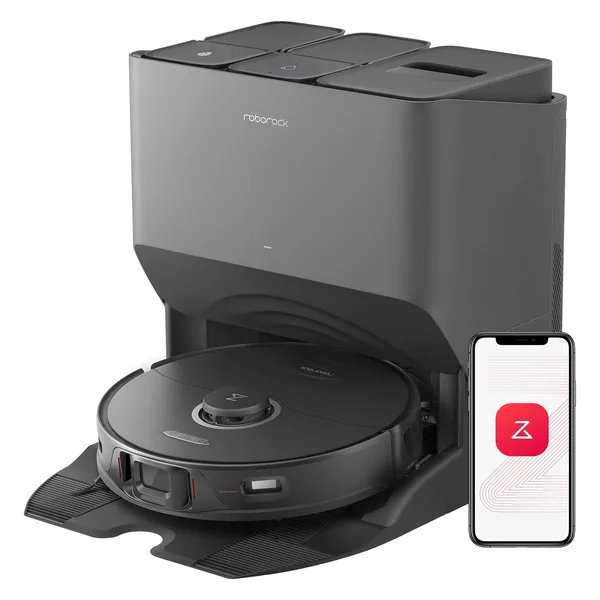
Roborock
Founded 2014, spun out of Xiaomi. Set the modern standard for smart robot vacuums.
- ✔ Best obstacle avoidance (ReactiveAI 3.0)
- ✔ Best app in the category
- ✔ Most reliable over long term
- ✘ Premium pricing above $600
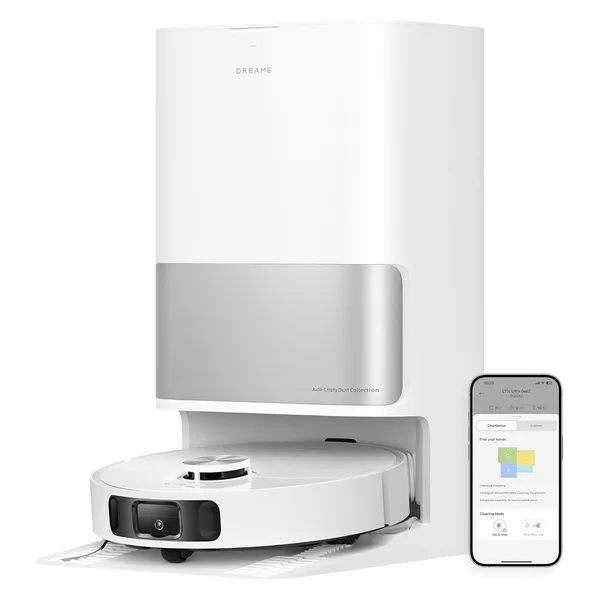
Dreame
Founded 2015, also backed by Xiaomi. Emerged as the primary Roborock challenger by 2024.
- ✔ Better value under $600
- ✔ Best edge mop (extendable arm)
- ✔ Higher suction specs at mid-range
- ✘ App is good but not Roborock-level
Head to head: 6 categories
Suction Power
| Model | Suction | Price |
|---|---|---|
| Dreame X40 Ultra | 12,000 Pa | $599 |
| Roborock S8 MaxV Ultra | 10,000 Pa | $1,099 |
| Dreame L10s Ultra Gen 2 | 7,000 Pa | $380 |
| Roborock S8 Pro Ultra | 6,000 Pa | $449 |
| Dreame D9 Max | 4,000 Pa | $259 |
Winner on paper: Dreame. The X40 Ultra at $599 hits 12,000 Pa while Roborock's equivalent flagship costs $1,099 for 10,000 Pa. Dreame packs more suction per dollar at every tier.
The caveat: above 6,000 Pa on hard floors, extra suction produces almost no measurable real-world difference. The numbers diverge; the clean floors don't. On thick carpet, the gap starts to matter. Honest winner: Dreame on paper, tie in real homes with hard floors.
Mopping Performance
This is the closest contest. Both brands now offer self-washing mop docks with auto-dry. The key difference is the mop reach.
Roborock approach
Sonic mopping: pad vibrates up to 4,000 times/min. Excellent on dried stains. Fixed position inside robot footprint, doesn't reach baseboard edges.
Dreame approach
Dual spinning pads that extend outward past the robot's body. Reaches baseboard edges. Better on greasy kitchen floors and sealed tile with grout.
Winner: Dreame for mopping. The extendable mop arm is a genuine hardware advantage Roborock doesn't have a direct answer to below the Saros Z70 price point.
Obstacle Avoidance
I deliberately placed the same obstacles in each home: a dark extension cord on dark flooring, a sock near a chair leg, a dog toy under the couch edge. Then I let each robot run and counted failures over two weeks.
| Machine | Dark cord misses | Sock encounters | Tech |
|---|---|---|---|
| Roborock S8 MaxV Ultra | 0 of 14 runs | 0 tangles | ReactiveAI 3.0 + structured light |
| Roborock S8 Pro Ultra | 1 of 14 runs | 0 tangles | ReactiveAI 2.0 |
| Dreame L10s Ultra Gen 2 | 3 of 14 runs | 1 tangle | AI camera obstacle |
| Dreame X40 Ultra | 2 of 14 runs | 0 tangles | AI + LiDAR 3.0 |
Winner: Roborock. Not even close. Structured light plus dual cameras handles low-light obstacle detection in a way Dreame's camera-only system doesn't match. If you have pet waste, kids' toys, or charging cables on your floor regularly, Roborock is the more reliable choice.
App and Software
Roborock's app is the most polished in the category. Map editing is intuitive. Custom zone cleaning is fast to set up. The 3D map visualization is genuinely useful for spotting coverage gaps. Scheduling by room, with different suction levels per room, works exactly as described.
Winner: Roborock. Dreame's app has improved significantly but still has moments of friction: zone editing is slower, and some firmware updates have introduced mapping regressions that required a full re-scan. Roborock is more mature software.
Value at Each Price Tier
Long-Term Reliability
Roborock has been in the premium robot vacuum market longer and has a more established support ecosystem. Replacement parts (brushes, filters, dock bags) are widely available and reasonably priced. Their customer support has a track record of replacing components on machines that fail within the first 2 years.
Winner: Roborock on track record, though Dreame's support has improved considerably since 2023. If buying a Dreame, check the warranty terms carefully before purchase.
Final scoreboard
| Category | Roborock | Dreame |
|---|---|---|
| Suction (specs) | — | Win |
| Suction (real-world) | Tie | Tie |
| Mopping | — | Win |
| Obstacle Avoidance | Win | — |
| App and Software | Win | — |
| Value Under $600 | — | Win |
| Value Over $600 | Win | — |
| Long-term Reliability | Win | — |
Which specific machine should you buy?
Best under $500: Dreame L10s Ultra Gen 2 ($380)
Best mop reach, 7,000 Pa, self-wash dock. If mopping performance matters and your budget is under $500, this is the pick.
Check Price on Amazon →
Best all-around: Roborock S8 Pro Ultra ($449)
Best obstacle avoidance in its price range, best app, full self-wash dock. The safer choice if you have pets, cables, or kids' stuff on your floors.
Check Price on Amazon →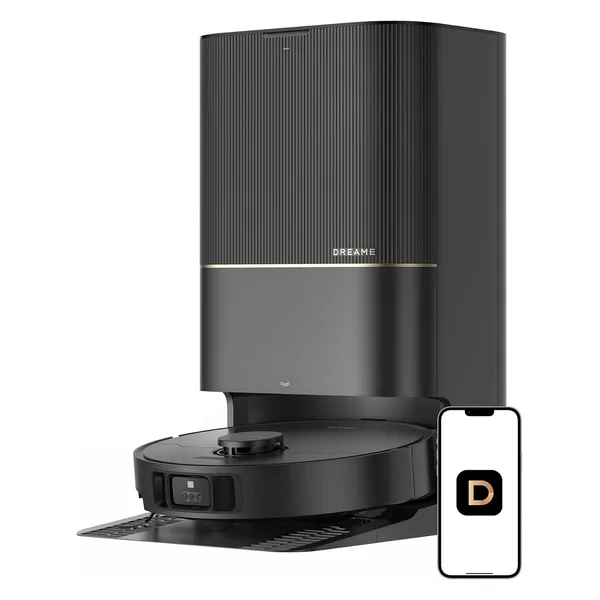
Best value flagship: Dreame X40 Ultra ($599)
12,000 Pa, retractable side brush, full self-clean station for $600. A lot of machine for the money.
Check Price on Amazon →Still not sure? Take the quiz.
Answer 3 questions about your floors, pets, and budget. We'll pick the right brand and model for you.
Find My Robot Vacuum →