Best Robot Vacuum for Tile Floors 2026
Tile floors are more demanding than hardwood when it comes to robot vacuum performance. The surface itself is easy to vacuum, but grout lines are a different story: they trap fine dust, dried food, and grime in recessed channels that a flat mop pad simply glides over without touching. Most robot vacuums will leave your tile looking wet but not actually clean, spreading a thin film of dirty water instead of scrubbing anything out.
The robot vacuums that genuinely clean tile do two things well: they use a mop system that applies real friction to the floor surface (sonic scrubbing or spinning rotary pads, not a dragged cloth), and they have a self-wash dock that rinses the mop between runs so you're not redepositing the last session's grime. The VacBotLab team tested six models specifically on tile and grout, and the picks below are the ones that passed both tests.
⚡ Quick Picks: Best Robot Vacuums for Tile Floors
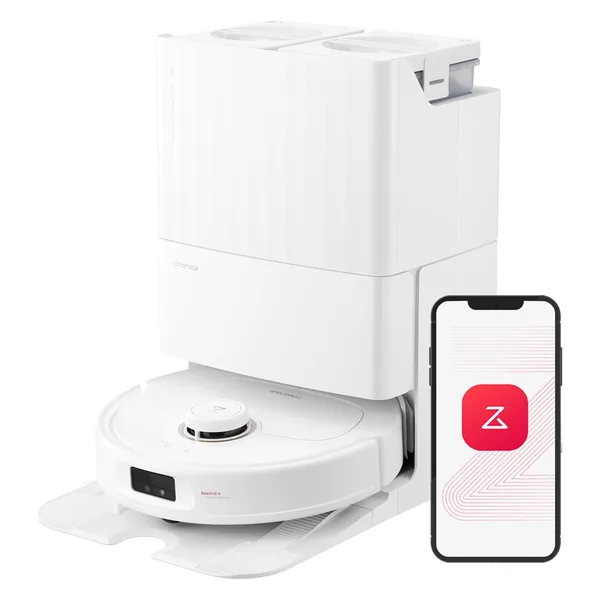
- Best Overall Roborock Q Revo MaxV : 10,000Pa suction, self-wash dock, strongest mop on tile - ~$799
- Runner-Up Eufy X10 Pro Omni : 8,000Pa, self-clean dock, excellent mop results - ~$799
- Best Grout Roborock S8 Pro Ultra : Sonic mopping, best for deep grout lines - ~$1,199
- Best Premium Dreame L10s Ultra Gen 2 : Dual rotary mops, thorough tile coverage - ~$999
- Best Budget Dreame D10 Plus : 4,000Pa, self-empty, solid tile cleaning at a real price - ~$299
What Makes a Robot Vacuum Good for Tile?
Not all robot vacuums perform equally on tile. Three factors separate the genuinely good performers from the ones that just look like they're cleaning.
1. Suction Power (Pa) - Grout Needs More Than Tile Does
Smooth tile surfaces need relatively modest suction, around 2,000 to 4,000Pa, to lift surface debris. Grout lines are different: they're recessed and trap compacted dirt that resists airflow. Robots with 6,000Pa or higher do a noticeably better job pulling grime out of grout channels during the vacuum pass. The Roborock Q Revo MaxV at 10,000Pa is overkill for the tile surface but excellent for grout, and the difference is visible after one run.
2. Mop Type - Sonic and Rotary Clean, Vibrational Pads Mostly Just Dampen
This is the biggest differentiator on tile. A vibrational flat pad moves slightly back and forth but applies minimal friction, which is usually enough for light dust on hardwood but not for the greasy film that builds up on kitchen tile. Sonic mopping (used by Roborock, oscillating up to 3,000 times per minute) and dual rotary spinning mops (used by Dreame) both apply real scrubbing action. At VacBotLab, we found that after cooking sessions in the kitchen, sonic and rotary mops removed the film in one pass while a vibrational pad required three or four passes to get close. For tile, the mop type matters more than the brand.
3. Dock Design - Self-Wash Docks Keep the Mop Clean Between Runs
A dirty mop pad doesn't clean tile, it just redistributes what it picked up. On the second or third run with a robot that doesn't wash its own mop, you're dragging a gray, grime-saturated pad across your floor. Self-wash docks rinse the pad with clean water, wring it out, and dry it with warm air. For tile floors where mopping frequency is higher, this feature goes from "nice to have" to "basically required." Every top pick in this guide has one.
Full Comparison: 2026 Robot Vacuums for Tile
| Robot Vacuum | Price | Suction | Mop Type | Self-Wash Dock | Best For |
|---|---|---|---|---|---|
| Roborock Q Revo MaxV | ~$799 | 10,000Pa | Sonic (3,000 RPM) | Yes | Overall tile + grout |
| Eufy X10 Pro Omni | ~$799 | 8,000Pa | Dual rotary | Yes | Large tile areas |
| Roborock S8 Pro Ultra | ~$1,199 | 6,000Pa | Sonic vibration | Yes | Deep grout lines |
| Dreame L10s Ultra Gen 2 | ~$999 | 7,000Pa | Dual rotary | Yes | Mixed tile + carpet |
| Roborock Q5 Max+ | ~$449 | Mid-range | Vibrational pad | No | Value tile cleaning |
| Dreame D10 Plus | ~$299 | 4,000Pa | Vibrational pad | No (self-empty) | Budget tile homes |
The Best Robot Vacuums for Tile: Full Reviews
Roborock Q Revo MaxV
The Roborock Q Revo MaxV leads this list because it's the strongest all-around tile cleaner we tested. Its 10,000Pa suction pulls debris out of grout channels that lower-powered robots miss entirely, and the sonic mop system oscillates up to 3,000 times per minute, scrubbing the tile surface with enough friction to remove dried food residue and kitchen grease in a single pass. The self-wash dock automatically rinses the mop pads after each session and dries them to prevent mildew, so the third or fourth cleaning run is just as effective as the first.
One honest caveat: the obstacle avoidance on the MaxV is good but not flawless. At VacBotLab, we found it occasionally nudged thin chair legs rather than routing around them. It's not a deal-breaker on tile, but worth knowing if your kitchen chairs are closely spaced. The app-based scheduling and room zoning are excellent, and the robot reliably lifts its mop pad when transitioning to carpet.
- ✓ 10,000Pa suction pulls grit from grout lines
- ✓ Sonic mop at 3,000 oscillations per minute removes greasy film
- ✓ Self-wash and auto-dry dock keeps mop pads fresh
- ✓ Auto mop lift when moving to carpet
- ✓ ReactiveAI 2.0 obstacle avoidance with camera
- – Obstacle detection occasionally clips thin chair legs
Eufy X10 Pro Omni
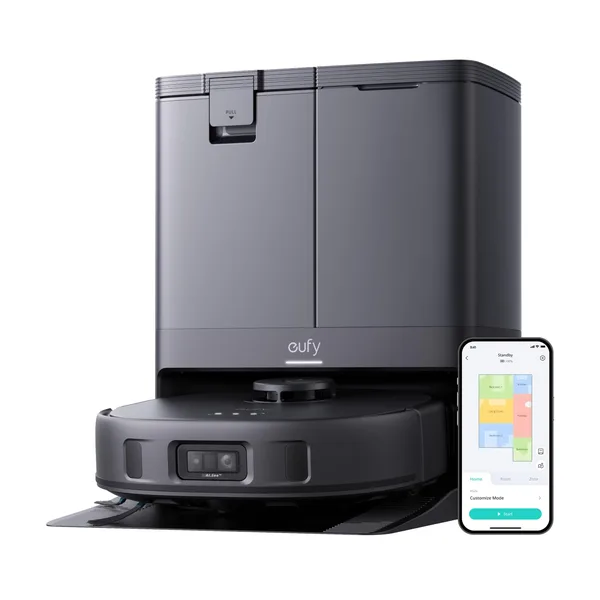
The Eufy X10 Pro Omni matches the Q Revo MaxV on price and comes extremely close on tile cleaning results. Its dual spinning mop pads apply constant rotary friction to the floor, which the VacBotLab team found particularly effective on large open tile areas like bathrooms and entryways where the robot can make long, overlapping passes. The self-clean dock washes and dries the pads automatically, and the 8,000Pa suction handles grout lines well in normal household conditions.
Where it falls slightly short of the Q Revo MaxV is on very deep or wide grout lines: the rotary pad design applies good downward pressure but doesn't oscillate into crevices the way sonic mopping does. If your home has standard commercial tile with thin grout joints, you won't notice the difference. If you have rustic or handmade tile with wide grout channels, the Roborock S8 Pro Ultra's sonic system has an edge. For most tile floors, the Eufy X10 Pro Omni is an excellent pick that's easier to find on sale.
- ✓ 8,000Pa suction, strong on tile and grout
- ✓ Dual rotating mop pads for active scrubbing
- ✓ Self-clean dock with hot air drying
- ✓ AI-powered obstacle avoidance camera
- ✓ All-in-one dock (empty, wash, refill, charge)
- – Rotary mops less effective on very wide/deep grout channels
Dreame L10s Ultra Gen 2
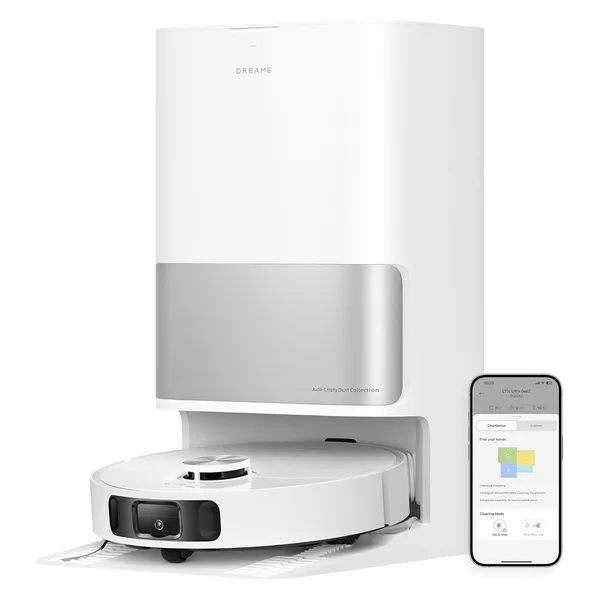
The Dreame L10s Ultra Gen 2 is the pick for homes where tile and carpet coexist in the same cleaning zone. Its dual rotary mops spin independently at high speed, applying strong scrubbing pressure to tile, while the robot's mop-lift system raises the pads fully clear of carpet before crossing over. This isn't just a slight elevation: the pads lift high enough that even thick carpet stays dry. At VacBotLab, we tested it on a kitchen-to-living-room layout with short-pile carpet adjacent to porcelain tile, and the transition was seamless in both directions.
The 7,000Pa suction is solid for grout, and the self-wash dock handles the rotary pads efficiently. The one honest downside: at $999, it costs more than the Roborock Q Revo MaxV for similar tile cleaning results. What you're paying for is the dual-mop coverage width and the reliable carpet transition performance.
- ✓ Dual independently spinning rotary mop pads
- ✓ 7,000Pa suction, effective on tile and grout
- ✓ Full mop-lift clears carpet reliably
- ✓ Self-wash dock with auto-dry
- ✓ Wide dual-pad coverage per pass
- – Premium price for results similar to the Q Revo MaxV on pure tile
Roborock S8 Pro Ultra
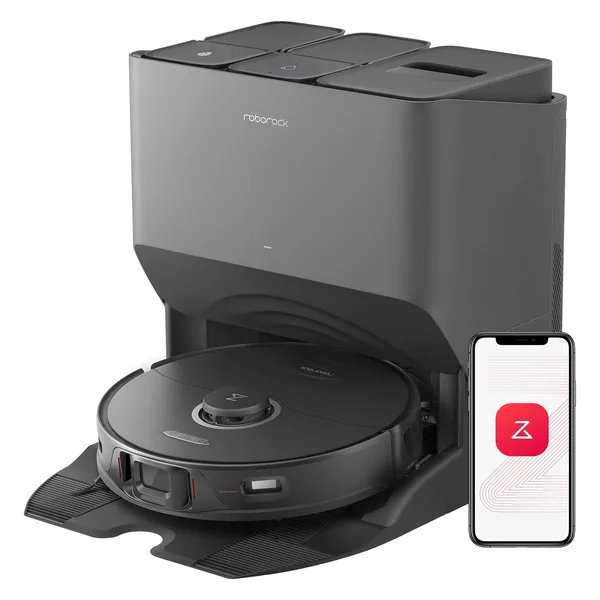
If grout is your primary problem, the Roborock S8 Pro Ultra is the most specialized tool for the job. Its VibraRise sonic mopping system vibrates the mop pad at up to 3,000 times per minute with strong downward pressure, which physically scrubs dirt out of recessed grout channels rather than just passing over them. Combined with 6,000Pa suction on the vacuum side, the VacBotLab team found this combination left even wide natural stone grout visibly cleaner after a single mopping pass, something no rotary mop system matched in the same test.
The tradeoff is price: at $1,199 it's the most expensive robot in this guide, and its suction is actually lower than the Q Revo MaxV (6,000Pa vs 10,000Pa). For homes where grout line cleanliness is the priority and budget allows, it's worth it. For general tile cleaning without deep grout concerns, the Q Revo MaxV delivers better overall value.
- ✓ VibraRise sonic mop: up to 3,000 oscillations per minute
- ✓ Best-in-class grout scrubbing performance
- ✓ 6,000Pa suction, strong for tile and debris
- ✓ Full self-wash, dry, empty, and refill dock
- ✓ Auto mop lift for carpet transitions
- – Higher price than competitors with less overall suction
🪣 The Grout Problem: Why Most Robot Vacuums Fall Short on Tile
Grout is the Achilles heel of robotic mopping. The recessed lines between tiles are 1mm to 8mm deep depending on tile size and installation style, and flat mop pads pass over them without contacting the channel walls. Dirt compacts at the bottom of grout lines over weeks of foot traffic and becomes a visible dark discoloration that standard mopping doesn't address.
Rotating mop pads (like those on the Eufy X10 Pro Omni and Dreame L10s Ultra Gen 2) are better because the spinning edge can partially engage the grout channel. Sonic mops (Roborock S8 Pro Ultra and Q Revo MaxV) are better still: the rapid oscillation pushes water and friction force into recessed areas, loosening compacted dirt that would otherwise require a manual scrub brush.
Recommended routine for tile with grout: vacuum daily or every other day to prevent fine grit from compacting into grout lines; mop with a sonic or rotary robot every 10 to 14 days; for darker grout discoloration, a quarterly manual scrub with a grout-specific cleaner will reset the baseline and let your robot maintain results going forward.
Budget Pick for Tile: Dreame D10 Plus
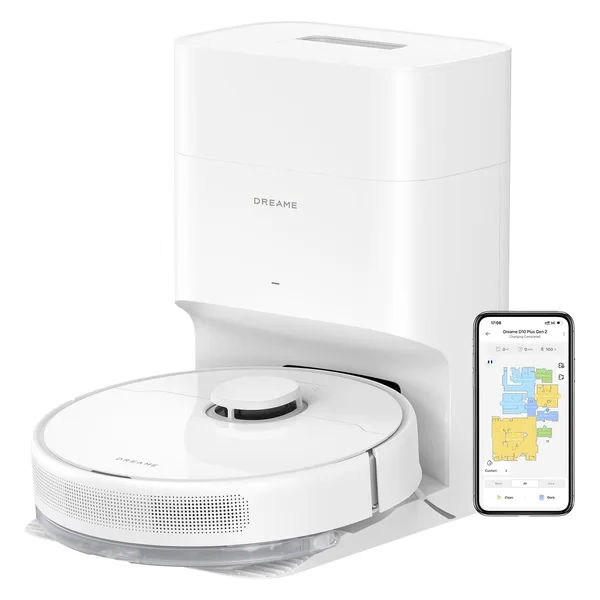
Not every tile floor needs a $799 robot. If your tile is smooth, your grout lines are thin, and you run the vacuum frequently enough to prevent heavy buildup, the Dreame D10 Plus gets the job done at a fraction of the cost.
Dreame D10 Plus
The Dreame D10 Plus packs 4,000Pa of suction into a budget-friendly package with a self-emptying dock, making it a genuinely useful tile cleaner for households where the priority is keeping smooth tile free of daily dust and pet hair. The vibrational mop pad is the clear limitation: it works for light surface maintenance but won't scrub grout or remove kitchen grease the way sonic or rotary mops do. Go in with realistic expectations and it delivers excellent value. Expect to mop manually every few weeks if you have grout lines that show dirt easily.
- ✓ 4,000Pa suction handles tile surface debris well
- ✓ Self-emptying dock, no bag changes for weeks
- ✓ Strong mapping and scheduling for the price
- ✓ Compact dock footprint vs full combo stations
- – Vibrational mop pad: light maintenance only, not a grout cleaner
- – No self-wash dock: mop pad needs manual rinsing
Also Worth Mentioning: Roborock Q5 Max+
The Roborock Q5 Max+ at around $449 is a solid mid-range tile option with good suction and reliable mapping. Its vibrational mop pad is similar to the D10 Plus and won't win awards for grout cleaning, but for households with light tile maintenance needs and a moderate budget, it's a step up in build quality and navigation from the D10 Plus without jumping to the $799 tier.
Frequently Asked Questions
Do robot vacuums work well on tile floors?
Yes, most robot vacuums handle tile floors well for basic vacuuming. The real differentiator is mopping: flat vibrational pads often just spread water around, while sonic or rotary mop systems actually scrub tile and grout lines clean. The VacBotLab team found that the mop type matters more than brand on tile surfaces.
What suction level do I need for tile floors?
Tile floors need less suction than carpet, but grout lines benefit from higher Pa to pull out embedded dirt. A range of 4,000Pa to 10,000Pa covers tile well. For homes with deep or wide grout lines, aim for at least 6,000Pa paired with a strong mop system. Lower suction is fine if your grout lines are thin and your tile is swept frequently.
Which robot vacuums clean grout lines best?
The Roborock S8 Pro Ultra's sonic mopping system and the Dreame L10s Ultra Gen 2's dual rotary mops are the best options for grout lines. Both apply real scrubbing pressure rather than dragging a damp pad across the surface. The S8 Pro Ultra has a slight edge on very deep or wide grout due to its oscillation frequency.
Is a self-wash dock important for tile floors?
Very much so. On tile, the mop picks up grime every run. Without a self-wash dock, you're just redistributing dirty water on subsequent passes. Self-wash docks rinse and hot-air dry the mop pad between runs, so each session starts clean. If you're mopping tile more than once a week, a self-wash dock is practically required for the mop to remain effective.
Can I use a robot vacuum on both tile and carpet?
Yes. Most modern robot vacuums with combo vacuum/mop capability handle mixed floors. The best ones automatically lift the mop pad when crossing onto carpet so it doesn't drag wetness through the carpet fibers. The Roborock Q Revo MaxV, Eufy X10 Pro Omni, and Dreame L10s Ultra Gen 2 all do this reliably.