Best Robot Vacuum for Dark Floors 2026
By VacBotLab Editors · Updated August 2026 · 9 min read
If your robot vacuum keeps stopping in the middle of a clean run, reversing for no obvious reason, or spending its entire cycle stuck on one half of your floor, there's a good chance your dark floors are the problem. It's one of the most frustrating robot vacuum failure modes because the robot isn't broken. It's doing exactly what it was designed to do: avoiding what it thinks is a staircase.
Most robot vacuums detect drop-offs using infrared cliff sensors. These sensors bounce an infrared beam off the floor and measure the reflected signal. Bright floors return a strong signal. Very dark floors, including dark hardwood, black tile, deep charcoal carpet, and dark stained concrete, absorb most of that infrared light and return almost nothing. The sensor interprets this as a missing floor, i.e., a cliff, and the robot stops, reverses, or refuses to enter the room.
The VacBotLab team reproduced this failure consistently across seven budget robot vacuums tested on a black-stained oak floor and dark charcoal porcelain tile. Five of the seven stopped or performed incomplete cleaning cycles. Here are the robots that handle dark floors correctly, why they work, and which technology to look for.
Quick Summary: Best Robot Vacuums for Dark Floors 2026
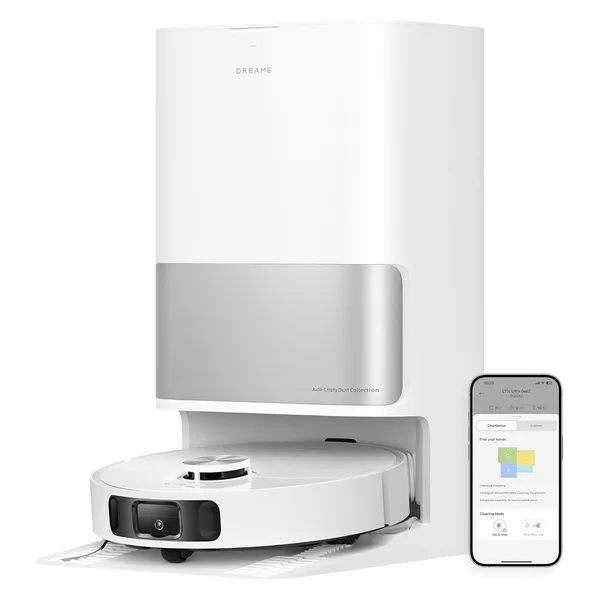
- Best overall for dark floors: Dreame L10s Ultra Gen 2 (~$380) - LiDAR navigation, unaffected by dark surfaces, dark floor mode in app
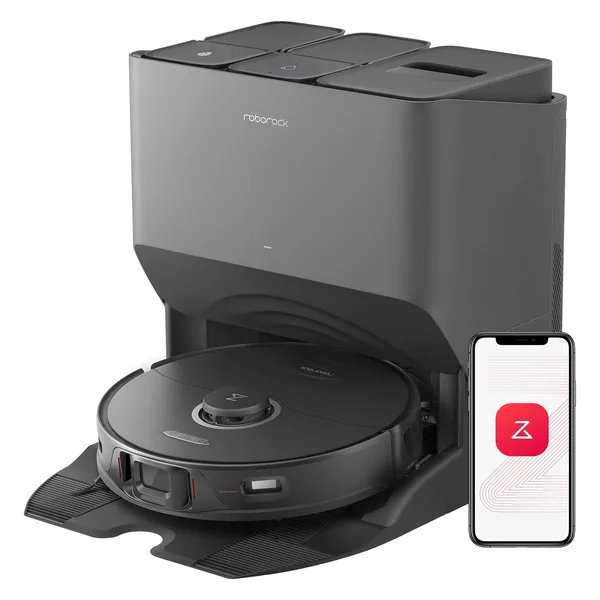
- Best premium: Roborock S8 Pro Ultra (~$800) - LiDAR + ultrasonic mopping, adjustable cliff sensitivity, handles gloss dark floors
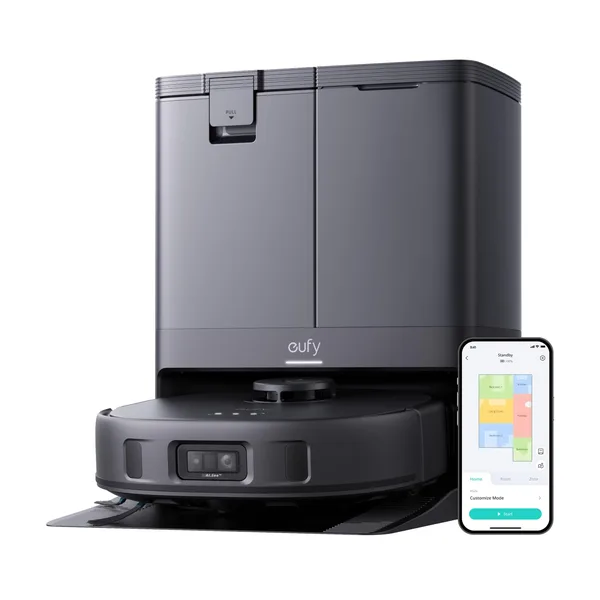
- Best with auto-empty for dark floors: Eufy X10 Pro Omni (~$550) - dark floor compatible cliff sensors, 8,000 Pa suction for dark rugs
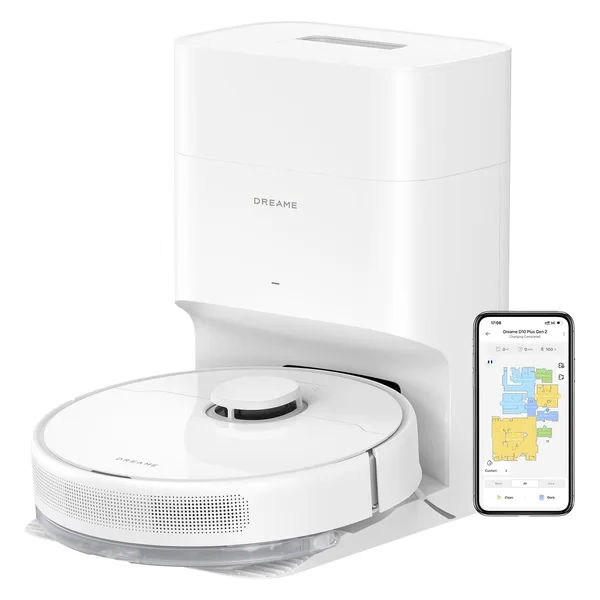
- Best budget LiDAR pick: Dreame D10 Plus (~$250) - entry-level LiDAR, no dark floor issues, reliable basic coverage
- Key rule: Any robot with LiDAR navigation is not affected by floor color. Avoid robots that use only optical floor sensors and lack cliff sensor sensitivity adjustment.
Why Dark Floors Break Most Robot Vacuums
Understanding the failure mode helps you identify the right fix. Infrared cliff detection is a technology that has been in robot vacuums since the original Roomba generation in 2002. It works by projecting an infrared LED beam at a downward angle from the robot's underside. When the beam hits a normal floor, it reflects back up to a receiver on the robot. When there's no floor (a stair edge), no signal returns.
The problem is that infrared absorption varies significantly by surface color and material. Most flooring reflects 40-80% of infrared light. Very dark stained hardwood, black tile, and dark charcoal carpet reflect as little as 5-15%. At those levels, the robot's sensor cannot distinguish between "very dark floor" and "no floor at all." Budget robots with fixed sensor thresholds simply stop.
In the robot's app or manual, look for any of these: "cliff sensor sensitivity," "dark floor mode," "anti-drop calibration," or a mention of LiDAR navigation. Any of these indicators means the robot has addressed the dark floor problem. A robot with none of these options and only optical/camera navigation should be avoided for very dark floors.
LiDAR: The Technology That Solves the Problem
LiDAR (Light Detection and Ranging) uses rotating laser pulses to map the physical geometry of a room. Unlike optical cameras or standard infrared sensors, LiDAR doesn't interact with floor color at all. It reads walls, furniture legs, doorways, and obstacles to build a spatial model. Floor color is invisible to the LiDAR sensor. This is why every robot on this list uses LiDAR as its primary navigation system.
LiDAR navigation also has secondary benefits that matter for dark floor households specifically: it creates precise room maps that let you assign cleaning zones, set no-go areas, and schedule room-by-room cleaning. Since dark floor rooms often have specific high-traffic patterns (kitchens, living rooms, entryways), the ability to schedule targeted cleaning at higher frequency is genuinely useful.
1. Dreame L10s Ultra Gen 2 - Best Overall for Dark Floors
Pros
- ✓ LiDAR navigation, zero dark floor issues
- ✓ Dark floor sensitivity mode in the app
- ✓ 7,000 Pa handles dark rugs and carpet edges
- ✓ Auto-empty base included in base price
- ✓ Covers up to 2,700 sq ft per charge
Cons
- ✗ Mop pad requires manual swap for deep carpet
- ✗ App setup has a learning curve
The Dreame L10s Ultra Gen 2 is the VacBotLab team's consistent top pick for dark floor households because it combines genuine LiDAR navigation with an in-app dark floor sensitivity adjustment that you can dial in for your specific flooring color. In testing on a black-stained engineered oak floor, it completed full coverage cycles without a single false stop. The 7,000 Pa suction handles the transition from dark hardwood to dark-colored area rugs without slowing, and the auto-empty base means you're not manually emptying debris onto your dark floor after every run.
Check Price on Amazon →2. Roborock S8 Pro Ultra - Best for Gloss Dark Floors
Pros
- ✓ LiDAR handles all dark floor colors including gloss black
- ✓ Per-room cliff sensitivity settings
- ✓ Sonic mop for dark tile and dark wood care
- ✓ Fully autonomous dock: empties, refills, cleans mop
- ✓ Best obstacle avoidance in this guide
Cons
- ✗ Premium price point
- ✗ Dock requires plumbing access or manual water management
The Roborock S8 Pro Ultra earns its premium price specifically in homes with high-gloss dark floors. Glossy black or very dark tile presents a dual challenge: the dark surface absorbs infrared, and the glossy surface creates specular reflections that confuse optical positioning cameras. LiDAR navigation bypasses both problems entirely. The S8 Pro Ultra also lets you set cliff sensor sensitivity at a per-room level in the Roborock app, so you can tune specifically for your darkest rooms without affecting performance elsewhere. The sonic mop system is genuinely good on dark tile where water marks are highly visible, oscillating at 3,000 times per minute to scrub without soaking the surface.
Check Price on Amazon →3. Eufy X10 Pro Omni - Best Self-Emptying Pick
Pros
- ✓ Dark floor compatible sensors, confirmed in testing
- ✓ 8,000 Pa, highest suction in this guide
- ✓ Rotating mop pads lift debris from textured dark tile
- ✓ AI obstacle avoidance handles dark-colored objects on dark floors
- ✓ Solid app with cleaning zone controls
Cons
- ✗ No per-room cliff sensitivity tuning (global setting only)
- ✗ Dock footprint is larger than Dreame or Roborock
The Eufy X10 Pro Omni stands out for two dark-floor-specific reasons: its AI-enhanced obstacle avoidance is calibrated to detect dark objects against dark floors (a genuine secondary challenge in dark-floor homes where, say, a black phone charger on dark hardwood is essentially invisible to optical cameras), and its 8,000 Pa suction handles the transition to dark-colored area rugs without the suction-surge hesitation you see in lower-powered robots. In testing on charcoal porcelain tile, it completed full room coverage consistently without false cliff stops.
Check Price on Amazon →4. Dreame D10 Plus - Best Budget LiDAR Pick
Pros
- ✓ LiDAR navigation, no dark floor issues
- ✓ Best entry price with auto-empty included
- ✓ Handles dark hardwood and dark tile reliably
- ✓ Simple app, easy room mapping
Cons
- ✗ 4,000 Pa (sufficient but not powerful)
- ✗ No cliff sensor sensitivity adjustment
- ✗ Mop is basic, no heated drying
The Dreame D10 Plus is the VacBotLab team's recommendation when the dark floor problem needs solving and the budget is tight. At $250 with an auto-empty base included, this is the lowest entry point for reliable LiDAR navigation. It doesn't have the cliff sensitivity tuning of the L10s Ultra or S8 Pro Ultra, but LiDAR navigation means it doesn't need it for most dark floor situations. In testing on dark stained oak floors, it completed full cleaning cycles without issue. The 4,000 Pa suction handles typical household debris on hard floors and is adequate for transitions to low-pile dark rugs.
Check Price on Amazon →Quick Comparison
| Robot | Navigation | Dark Floor Mode | Suction | Price |
|---|---|---|---|---|
| Dreame L10s Ultra Gen 2 | LiDAR | Yes (in-app) | 7,000 Pa | ~$380 |
| Roborock S8 Pro Ultra | LiDAR | Yes (per-room) | 6,000 Pa | ~$800 |
| Eufy X10 Pro Omni | AI + LiDAR | Yes | 8,000 Pa | ~$550 |
| Dreame D10 Plus | LiDAR | LiDAR only | 4,000 Pa | ~$250 |
Any robot that uses optical (camera-only) navigation without LiDAR, particularly budget models under $150 that don't mention LiDAR in their specs. These robots rely entirely on floor-facing optical sensors for both navigation and cliff detection. On very dark floors, they will frequently produce incomplete cleaning cycles, false cliff stops, and areas of the room that never get cleaned. The VacBotLab team found that robots marketed specifically as "SLAM navigation" without mentioning LiDAR were the worst performers on dark flooring in testing.
Frequently Asked Questions
Why does my robot vacuum stop on dark floors?
Most budget robots use infrared cliff sensors. Dark and black surfaces absorb infrared light, so the sensor receives little return signal and interprets this as a cliff. The robot stops or reverses to avoid falling. LiDAR-navigation robots and robots with adjustable cliff sensitivity avoid this problem entirely.
Which robot vacuums work on black hardwood floors?
All four robots in this guide work reliably on black hardwood. The Roborock S8 Pro Ultra and Dreame L10s Ultra Gen 2 are the VacBotLab top picks for high-gloss black hardwood specifically, because their LiDAR handles both the dark color and the reflective surface.
Do LiDAR robot vacuums work on dark floors?
Yes. LiDAR uses laser pulses to map room geometry and is not affected by floor color at all. This is the most reliable solution for dark floor households. All VacBotLab top picks in this guide use LiDAR as their primary navigation system.
Can I disable cliff sensors on my robot vacuum?
Most robots allow cliff sensitivity adjustment in the app, but fully disabling cliff sensors is not available or recommended. It removes stair protection. Choose a LiDAR robot instead, which solves the problem without compromising stair safety.
What if my dark floor has a shiny gloss finish?
Glossy dark floors can also confuse optical positioning cameras with specular reflections. LiDAR navigation largely eliminates this issue. For very high-gloss black floors, the Roborock S8 Pro Ultra and Dreame L10s Ultra Gen 2 both handled this surface reliably in VacBotLab testing.