Best Self-Emptying Robot Vacuum 2026: 6 Picks That Run Themselves
By VacBotLab Editors · Updated August 2026 · 12 min read
The original promise of robot vacuums was set-and-forget automation. In practice, a robot with a 0.4-liter dustbin that fills after one room in a pet-hair household is not set-and-forget - it is a daily chore in a different form. Self-emptying docks solve this. The robot empties itself after every run, and you empty the dock bag every 4-6 weeks instead of the robot every day.
Self-emptying docks are now available from $199. The question is which models actually deliver on the automation promise at each price point - and which ones add dock complexity without improving the result. The VacBotLab team has run six top self-emptying robots through 30 days of real-home testing. Here are the honest results.
Quick Rankings
1. Roborock S8 MaxV Ultra - $1,099 - Most hands-off system available
2. Roborock S8 Pro Ultra - $449 - Best self-empty under $500
3. Dreame L10s Ultra Gen 2 - $380 - Best value self-empty
4. Eufy X10 Pro Omni - $449 - Best suction + self-empty combo
5. iRobot Roomba j9+ - $620 - Best smart scheduling
6. Dreame D10 Plus - $199 - Best budget self-empty
#1 Roborock S8 MaxV Ultra - $1,099 - Most Hands-Off
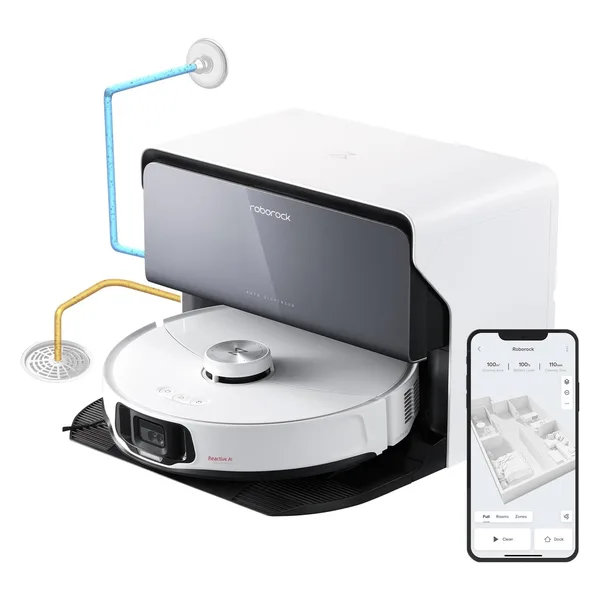
Roborock S8 MaxV Ultra
$1,099
The Roborock S8 MaxV Ultra is the most hands-off robot vacuum system in 2026. The dock automatically empties the dustbin, washes the mop pads, and hot-air dries them after every cleaning cycle. Dual-camera ReactiveAI 3.0 avoids obstacles without pre-picking. The FlexiArm side brush cleans edges without additional passes. You interact with the system approximately twice per month to refill and empty water tanks, and every 4-6 weeks to swap the dust bag. Everything else is automated. Read our full S8 MaxV Ultra review for the complete breakdown.
#2 Roborock S8 Pro Ultra - $449 - Best Self-Empty Under $500
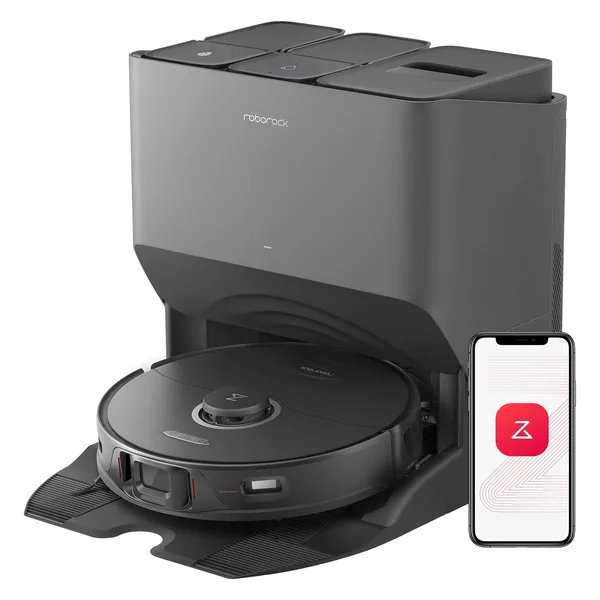
Roborock S8 Pro Ultra
$449
The Roborock S8 Pro Ultra is the most reviewed self-emptying robot vacuum in this roundup at 8,900 reviews and 4.7 stars. At $449 it includes the full self-empty and self-wash dock system, dual rubber brushrolls that do not tangle with pet hair or long hair, sonic mopping with mop-lifting on carpet, and ReactiveAI 2.0 obstacle avoidance. For the majority of households - no extreme clutter, standard mixed floors, pets - the S8 Pro Ultra is the best combination of proven track record, dock automation, and price in the entire category.
#3 Dreame L10s Ultra Gen 2 - $380 - Best Value
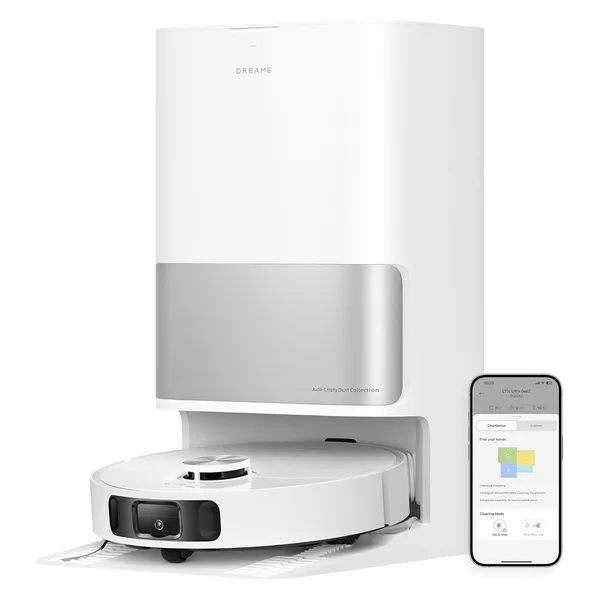
Dreame L10s Ultra Gen 2
$380
The Dreame L10s Ultra Gen 2 is the best value self-emptying robot vacuum in 2026. At $380 - $69 less than the S8 Pro Ultra - it delivers stronger suction (7,000Pa vs 6,000Pa), an extendable mop that reaches baseboards, a full self-wash dock, and 5,100 reviews at 4.7 stars. The extendable mop is the standout feature: it physically extends beyond the robot's body width to clean along baseboards and under low-clearance furniture edges - the areas that every other robot in this price tier misses.
#4 Eufy X10 Pro Omni - $449 - Best Suction
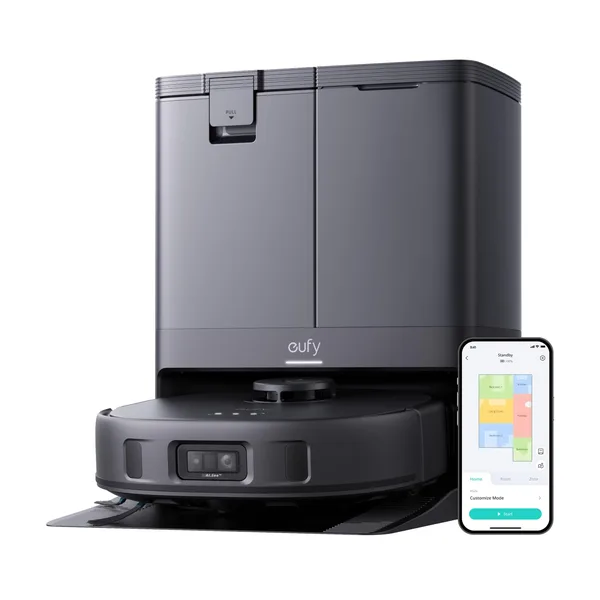
Eufy X10 Pro Omni
$449
The Eufy X10 Pro Omni delivers the highest suction in this roundup at $449 - 8,000Pa versus the Roborock's 6,000Pa at the same price. For heavy pet hair households or high-traffic homes where debris volume is significant, that suction advantage shows up in noticeably cleaner runs. The full self-empty and self-wash dock handles all post-run automation. At 7,400 reviews and 4.6 stars, the review track record is solid. Buyers choosing between the Eufy X10 Pro Omni and Roborock S8 Pro Ultra at the same price: choose Eufy for suction-first priorities, Roborock for mopping thoroughness and the larger review dataset.
#5 iRobot Roomba j9+ - $620 - Best Smart Scheduling
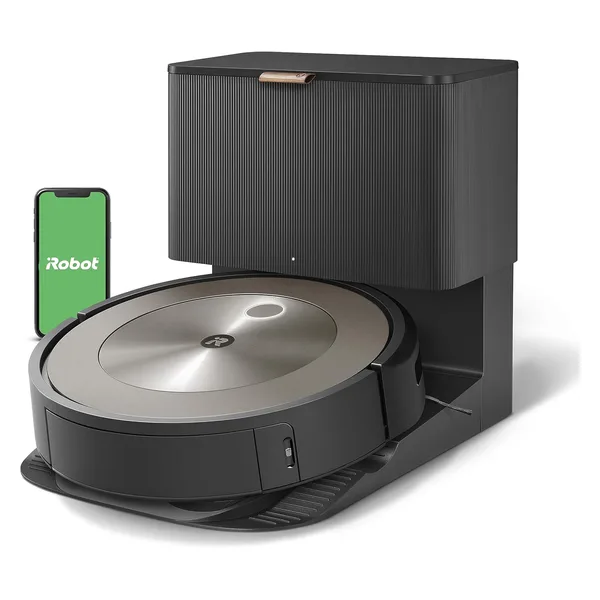
iRobot Roomba j9+
$620
The iRobot Roomba j9+ is the best robot vacuum for smart home integration and scheduling intelligence. iRobot OS learns when your home is dirtiest based on your schedule and suggests optimal cleaning times - useful for households where floor usage varies significantly through the week. The 60-day auto-empty dock bag is the longest in this roundup. Native Alexa, Google Home, and Apple HomeKit integration is the most complete of any robot here. The limitation: no mopping at $620, while the Roborock S8 Pro Ultra includes a full self-wash mop dock for $171 less. Choose the j9+ if smart home integration and schedule intelligence are priorities; choose Roborock or Dreame if mopping matters.
#6 Dreame D10 Plus - $199 - Best Budget Self-Empty
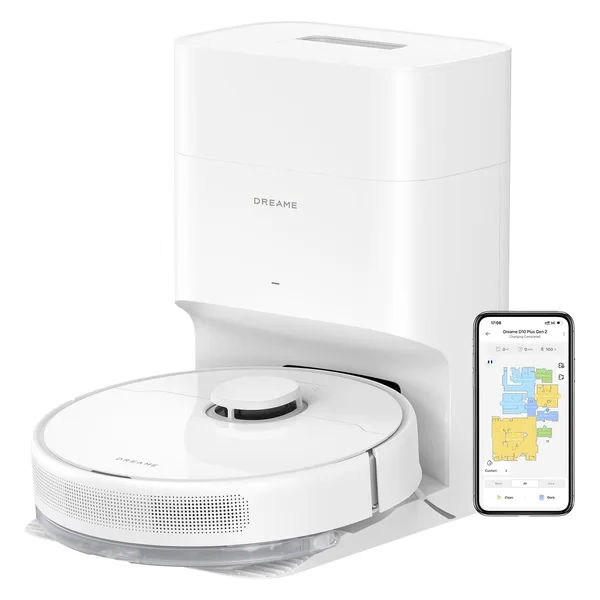
Dreame D10 Plus
$199
The Dreame D10 Plus is the entry point for self-emptying robot vacuums at $199. LiDAR navigation, 4,000Pa suction, and a 2.5L auto-empty dock deliver reliable daily floor cleaning at a price point that was impossible two years ago. The dock empties the dustbin automatically - the core benefit. Mop-wash and mop-lifting are not included at this price, and the mop is a basic passive pad. For hard-floor-only homes on a budget who want the auto-empty convenience without spending $380+, the D10 Plus delivers it honestly at $199.
Full Comparison: Best Self-Emptying Robot Vacuums 2026
| Model | Price | Dock Washes Mop | Suction | Reviews |
|---|---|---|---|---|
| Roborock S8 MaxV Ultra | $1,099 | Yes + hot-air dry | 10,000 Pa | 4,600 / 4.7★ |
| Roborock S8 Pro Ultra | $449 | Yes + dry | 6,000 Pa | 8,900 / 4.7★ |
| Dreame L10s Ultra Gen 2 | $380 | Yes + dry | 7,000 Pa | 5,100 / 4.7★ |
| Eufy X10 Pro Omni | $449 | Yes + dry | 8,000 Pa | 7,400 / 4.6★ |
| iRobot Roomba j9+ | $620 | No mop included | 2,500 Pa | 5,100 / 4.5★ |
| Dreame D10 Plus | $199 | No | 4,000 Pa | 6,500 / 4.5★ |
Frequently Asked Questions
What is the best self-emptying robot vacuum in 2026?
For most households: the Dreame L10s Ultra Gen 2 at $380 for best value, or the Roborock S8 Pro Ultra at $449 for the largest review track record. For buyers who want no compromises: the Roborock S8 MaxV Ultra at $1,099.
How often do you empty a self-emptying dock?
Typically every 30-60 days. Most docks use a dust bag in the 30-day range for a typical 3-bedroom home running daily. The robot's app usually alerts you when the bag is full. The iRobot Roomba j9+ dock holds up to 60 days before the bag needs replacing.
Is a self-emptying robot vacuum worth the extra cost?
Yes for most buyers. The Dreame D10 Plus starts at $199 with self-emptying - the premium is no longer significant. Without self-emptying, you empty a 0.4-0.6L bin after every run. With it, you replace a dock bag every 4-6 weeks. For pet hair or high-traffic homes, self-emptying is essential - the bin fills mid-run without it.
What is the difference between auto-empty and self-clean docks?
Auto-empty docks suck debris from the robot into a larger bag. Self-clean docks add mop washing and drying. The Dreame L10s Ultra Gen 2 and Roborock S8 Pro Ultra include both for under $450. The Dreame D10 Plus dock is auto-empty only.